How to Price an AI Product: A Practical Framework for Founders
Learn how to price an AI product using usage, workflow, outcome-based, or hybrid models while protecting margins, matching customer value, and planning accurate metering.
Abdul Ahad Akram, CEO & Founder, XenonDev
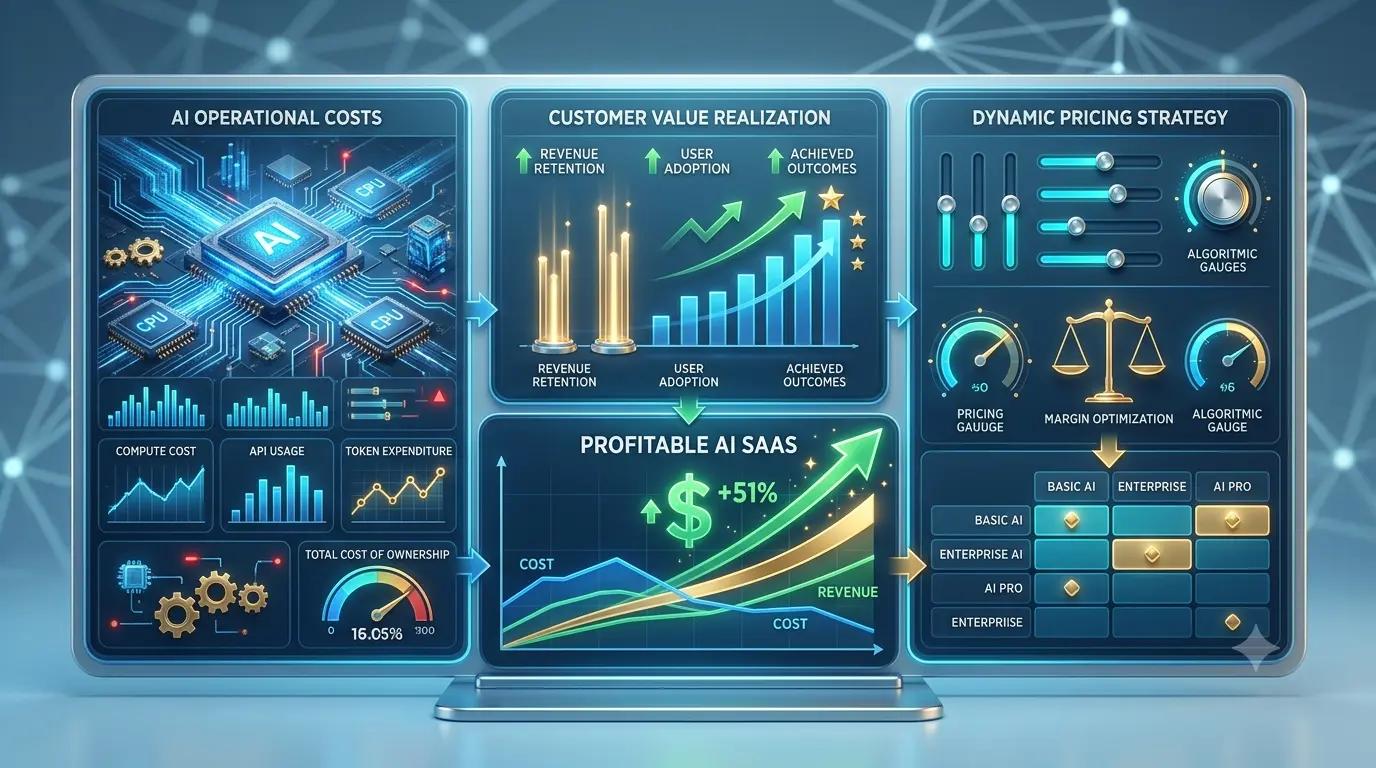
Pricing an AI product is more complex than pricing traditional software because the usual methods don’t apply. Seat-based pricing assumes low costs per user, but with AI, every query or task incurs significant compute costs. This means the price you charge is directly linked to your operational costs in a way that didn’t exist with traditional SaaS.
Quick answer: Most AI products should be priced one of three ways — by usage, by completed work, or by outcome achieved — and if you're not sure which one fits, a hybrid of a base fee plus usage or outcome tiers is the safest starting point. The choice matters less for the invoice and more for what it forces your product to be able to measure.
Why This Isn't a SaaS Pricing Problem
Traditional SaaS pricing asks one question: what will someone pay for access? AI pricing has to ask a second question at the same time: what does it cost you every time someone uses it? Get the cost side wrong and a pricing model that looks healthy on a slide deck quietly loses money on every transaction once real usage kicks in. If you haven't run that math yet, it's worth doing before you lock in a pricing model — we've covered how to calculate it here. Everything below assumes you know your real cost per customer, not an assumed one.
The Three Ways to Charge for an AI Product
Usage-based pricing charges per API call, per token, or per generation. It maps cleanly to your actual costs, which makes margins predictable and accounting simple. The tradeoff is that most buyers don't think in tokens — this model works well for technical buyers (developers, data teams) who want granular control, and works poorly for a buyer who just wants to know what something costs per month without doing math first.
Workflow-based pricing charges per completed task — a document drafted, a meeting booked, a report generated. It's easier for a buyer to understand than raw usage, because it maps to a unit of work they already recognize. The tradeoff shows up on your side: one task might cost you ten times more compute than another, so your margin per transaction gets less predictable even as your pricing gets easier to sell.
Outcome-based pricing charges only when the AI actually solves the problem — a resolved support ticket, a closed lead, a successfully processed claim. This is the tightest possible alignment between what a customer pays and what they got, and it's why companies confident in their product's reliability increasingly favor it (Intercom's AI agent, for example, is billed per resolved ticket rather than per message sent). The cost of that alignment is that you absorb all the variability — a hard case that takes far more compute than a routine one still gets billed the same.
None of these is inherently "better." The right one depends on whether your buyer is technical or not, how consistent your task complexity is, and how confident you are in your product's success rate. What matters is picking deliberately instead of defaulting to whichever is easiest to bill.
When You're Not Sure: Start With a Hybrid
If none of the three feels like an obvious fit yet, that's normal this early — and a hybrid model is the standard way founders bridge that uncertainty. Charge a base platform fee that covers your fixed costs and gives the customer budget predictability, then layer usage or outcome-based pricing on top for anything beyond an included allotment.
A simple version: set your base fee to comfortably cover your delivery cost per customer, bundle in a reasonable amount of usage or outcomes, and price overages separately. As a customer's usage grows, your revenue from them grows with it — but they never face a bill with zero predictability, which is usually what kills a deal with a buyer who has to get pricing approved internally.
Determine Your Price Based on Customer Feedback, Not Just Numbers
Most founders default to cost-plus pricing, calculate what it costs you, double it, and charge that, because asking for more than that feels uncomfortable. It also tends to leave real money on the table if your product is actually solving an expensive problem for the customer.
To find the right price, start with an initial number and gauge prospects' reactions. If someone says "sold" immediately, it’s too low. Increase the price until you hear hesitations like "let me think" or "I need to check the budget." That hesitation signals you're near the right price. Stop raising it once it starts losing you deals instead of just delaying them.
Where This Affects What You Build, Not Just What You Charge
Your pricing model is a crucial product requirement. Outcome-based pricing relies on the product’s ability to accurately detect and log outcomes, making it an engineering feature. Usage-based pricing demands precise metering from the start, not added on after billing disputes. Workflow pricing requires a clear definition of "one task," which can become complicated with edge cases in production.
This is exactly the kind of decision that's cheaper to get right before a product is built than to retrofit afterward, if you're still scoping the build, it's worth deciding your pricing model early enough that metering and outcome-tracking are part of the architecture, not an afterthought bolted on after launch.
Frequently Asked Questions
What's the easiest pricing model to start with for a new AI product?
Hybrid pricing, a base fee plus usage or outcome-based tiers, is the most common starting point, because it gives customers budget predictability while still letting your revenue scale with actual usage. Pure usage-based or pure outcome-based pricing generally works better once you have enough data to trust your margins under real variability.
Should I charge per token or API call for my AI product?
Only if your buyer is technical enough to think in those units, developers and data teams generally accept it, most business buyers don't. If your buyer is non-technical, translate the same cost structure into a completed-task or outcome metric they can actually reason about.
How do I price an AI product before I have enough customers to know my real costs?
Estimate your cost per interaction as conservatively as you can, price with a healthy margin above that estimate, and revisit the number monthly as real usage data comes in. Early pricing should be treated as a working hypothesis, not a permanent decision.
Is outcome-based pricing always better because it's more aligned with value?
No, it's better when you're confident in your success rate and can absorb the cost variability of harder cases. If your product's reliability is still improving, outcome-based pricing can expose you to real losses on the cases that don't go well.